
- September 22, 2025
- Blog
- rishabhrusia7
- 0 Comments
Photosynthesis Simplified for Students
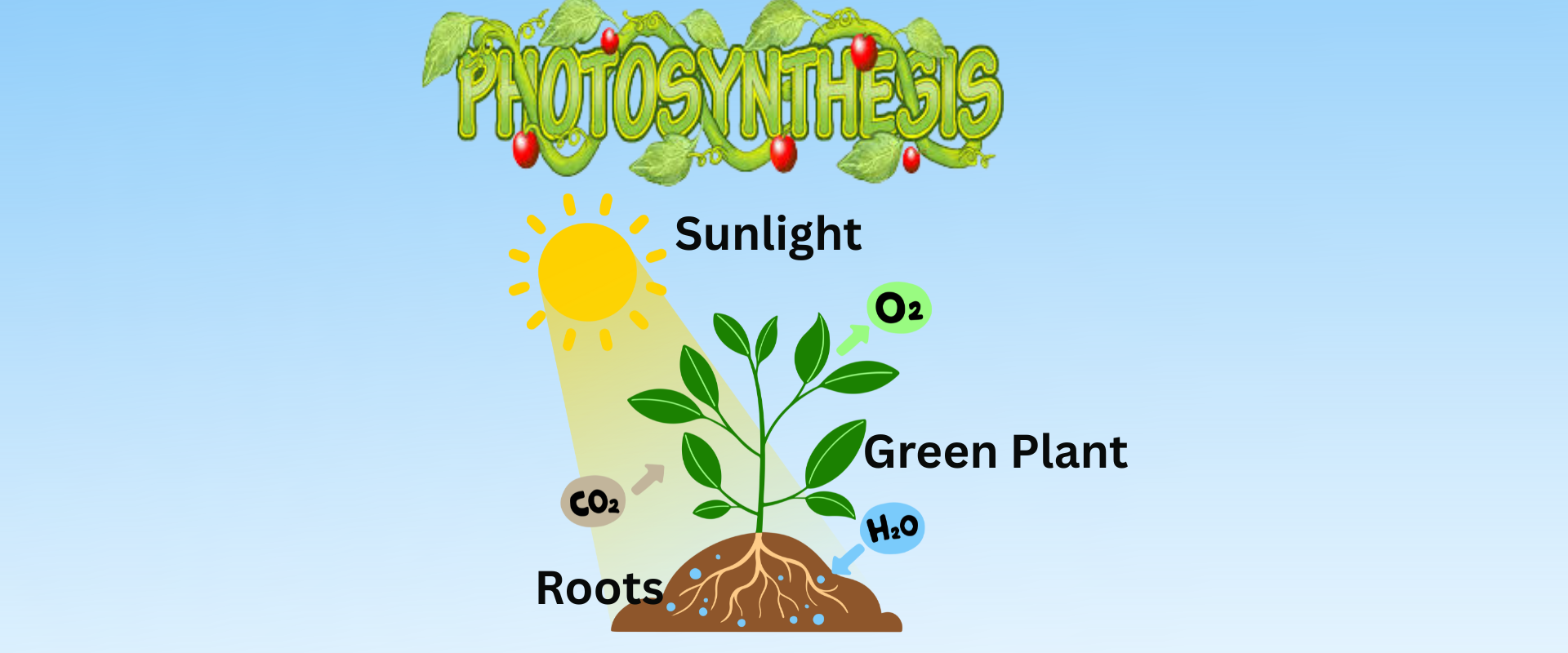
Photosynthesis is the magical process that makes life on Earth possible. Plants, algae, and some bacteria use sunlight, water, and carbon dioxide to make food. The amazing part? While making their own food, they also release oxygen, which all living beings, including humans, need to survive.
What Is Photosynthesis in Biology?
Photosynthesis is the process by which green plants prepare their own food.
- Plants take in carbon dioxide (CO₂) from the air and water (H₂O) from the soil.
- With the help of sunlight and the green pigment chlorophyll, they convert these into glucose (sugar) and release oxygen (O₂).
Where Does This Process Occur?
Photosynthesis mainly happens inside chloroplasts, the tiny green “kitchens” in plant cells.
- Chlorophyll, the green pigment in leaves, absorbs sunlight.
- Most photosynthesis happens in leaves, but any green part of the plant can perform it.
That’s why leaves are called the “food factories” of plants.
Photosynthesis Equation and Chemical Formula
The whole process of photosynthesis can be shown in a simple formula:
6CO2+6H2O+Sunlight→C6H12O6+6O2
Meaning:
- 6 molecules of carbon dioxide + 6 molecules of water + sunlight
= 1 molecule of glucose + 6 molecules of oxygen.
Process of Photosynthesis: Step by Step
Photosynthesis happens in two main stages:
Light Reaction (Light-dependent Reaction)
- Happens in the presence of sunlight.
- Chlorophyll absorbs sunlight.
- Water molecules split into hydrogen and oxygen.
- Oxygen is released into the air.
- Energy is stored in special molecules (ATP & NADPH).
Dark Reaction (Light-independent Reaction / Calvin Cycle)
- Does not need direct sunlight.
- Uses the energy stored in ATP and NADPH.
- Carbon dioxide is converted into glucose (plant food).
Factors Affecting Photosynthesis
Photosynthesis can be fast or slow depending on certain factors:
- Light intensity – more light = faster photosynthesis (to a limit).
- Carbon dioxide – more CO₂ = better photosynthesis (up to a point).
- Temperature – moderate temperature helps; too hot or too cold slows the process.
- Water – plants need water to keep the process going.
Importance of Photosynthesis
Photosynthesis is important because:
- It produces oxygen that all animals and humans need to breathe.
- It makes glucose, the basic food for plants.
- It supports the food chain — herbivores eat plants, carnivores eat herbivores.
- It helps maintain the balance of carbon dioxide and oxygen in the air.
- It reduces excess CO₂, controlling global warming.
Photosynthesis Examples in Everyday Life
- When you eat fruits, vegetables, or grains, you are eating the products of photosynthesis.
- Wood, paper, and cotton — all come from plants that grew by photosynthesis.
- Even fossil fuels like coal and oil started as plants that once captured sunlight.
Key Facts about Photosynthesis
- Photosynthesis happens in chloroplasts using chlorophyll.
- Sunlight is the main source of energy.
- Oxygen is just a by-product, but essential for life.
- It has two stages: light reaction and dark reaction.
- Equation to remember: CO₂ + H₂O → Glucose + O₂ (with sunlight & chlorophyll).
FAQs on Photosynthesis Simplified
1. What is Photosynthesis?
It is the process by which plants make their own food using sunlight, water, and carbon dioxide.
2. Why is Photosynthesis important?
Because it provides food and oxygen, without which life cannot exist.
3. What are the stages of Photosynthesis?
Light reaction (needs sunlight) and dark reaction (doesn’t need sunlight directly).
4. Write down the Photosynthesis Equation.
6CO₂ + 6H₂O → C₆H₁₂O₆ + 6O₂ (in presence of sunlight & chlorophyll).
5. Which organisms can photosynthesize?
Green plants, algae, and some bacteria.

Leave A Comment